
Last updated November 16, 2026
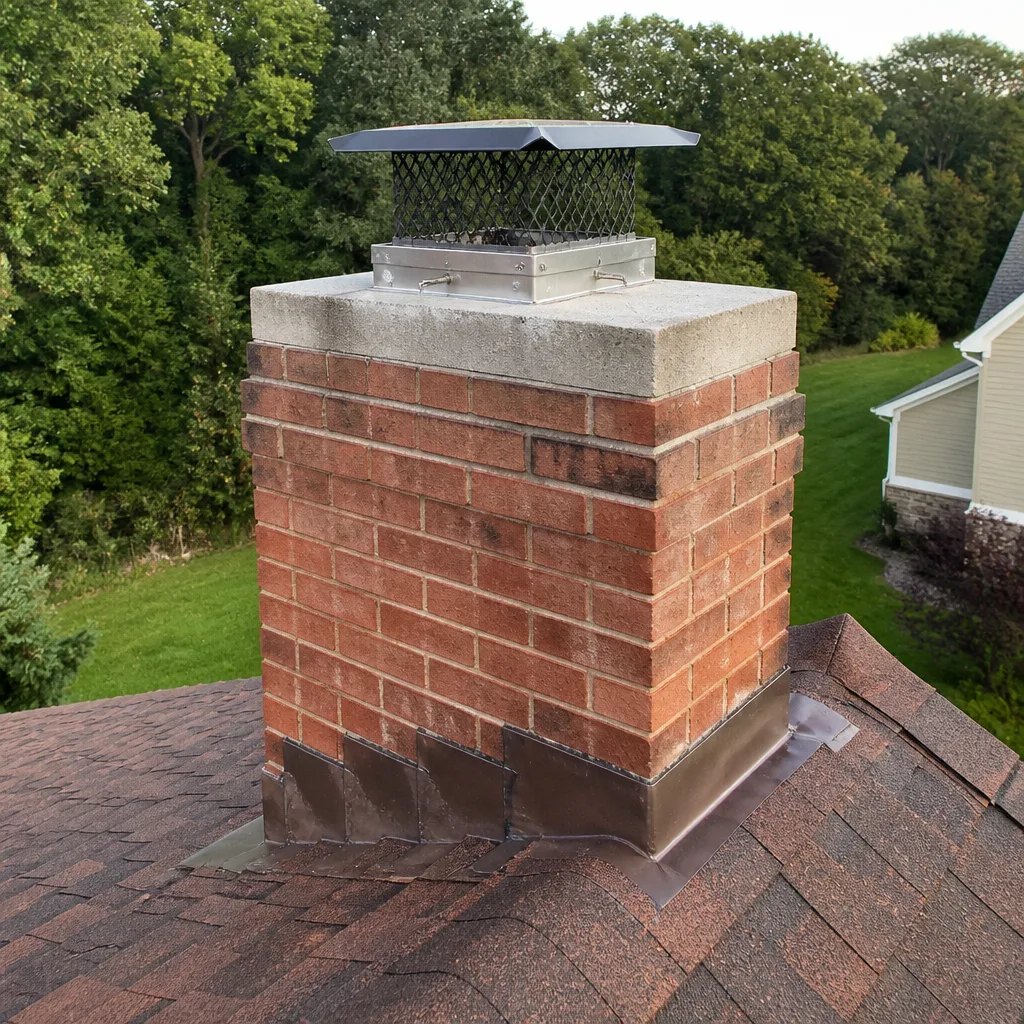 Sweep & inspection
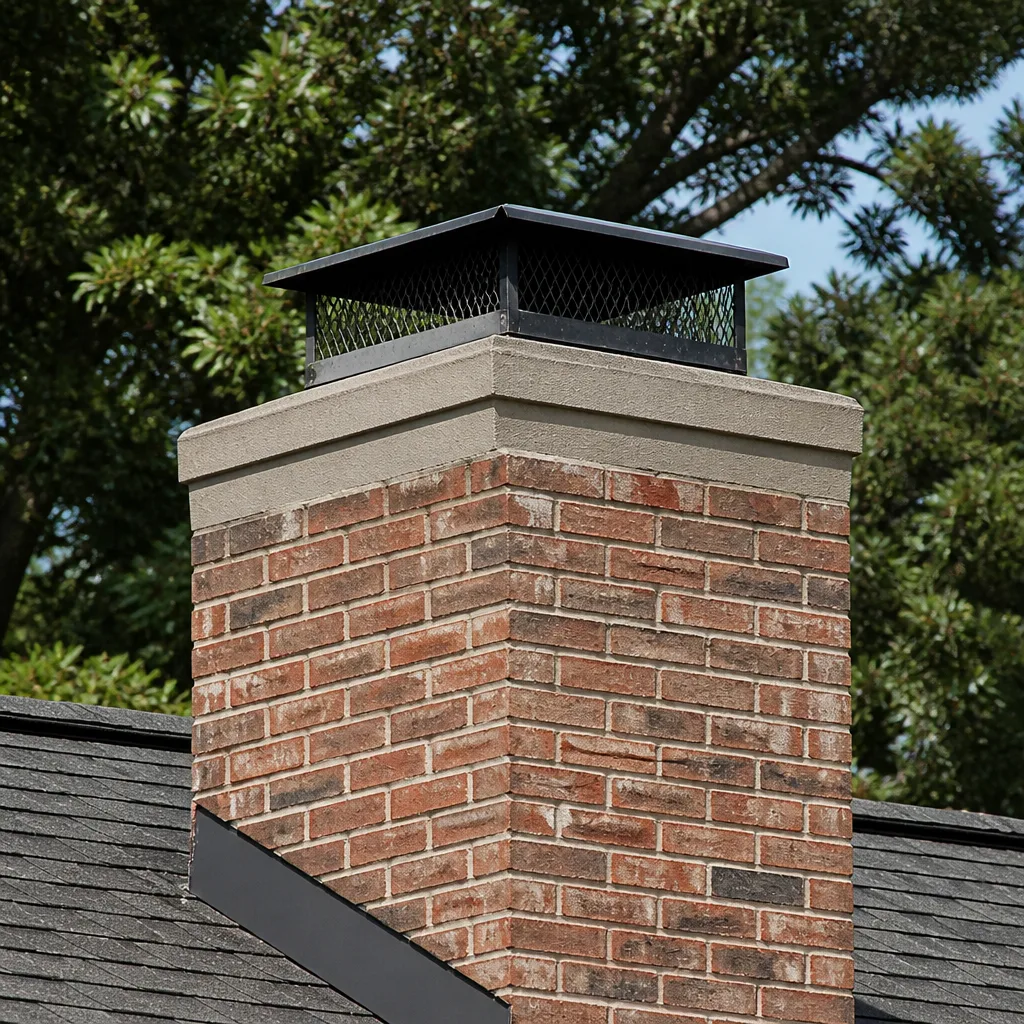 Caps & crowns
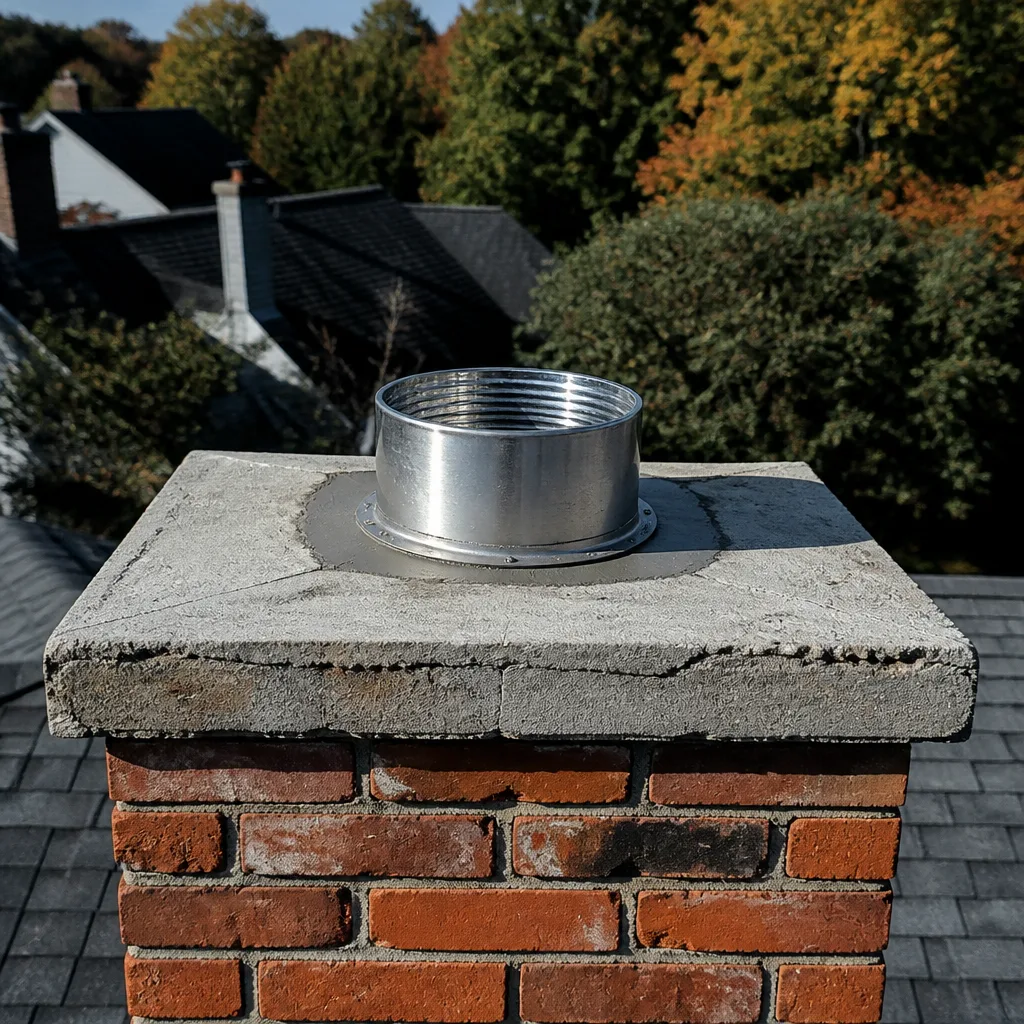 Flue relining
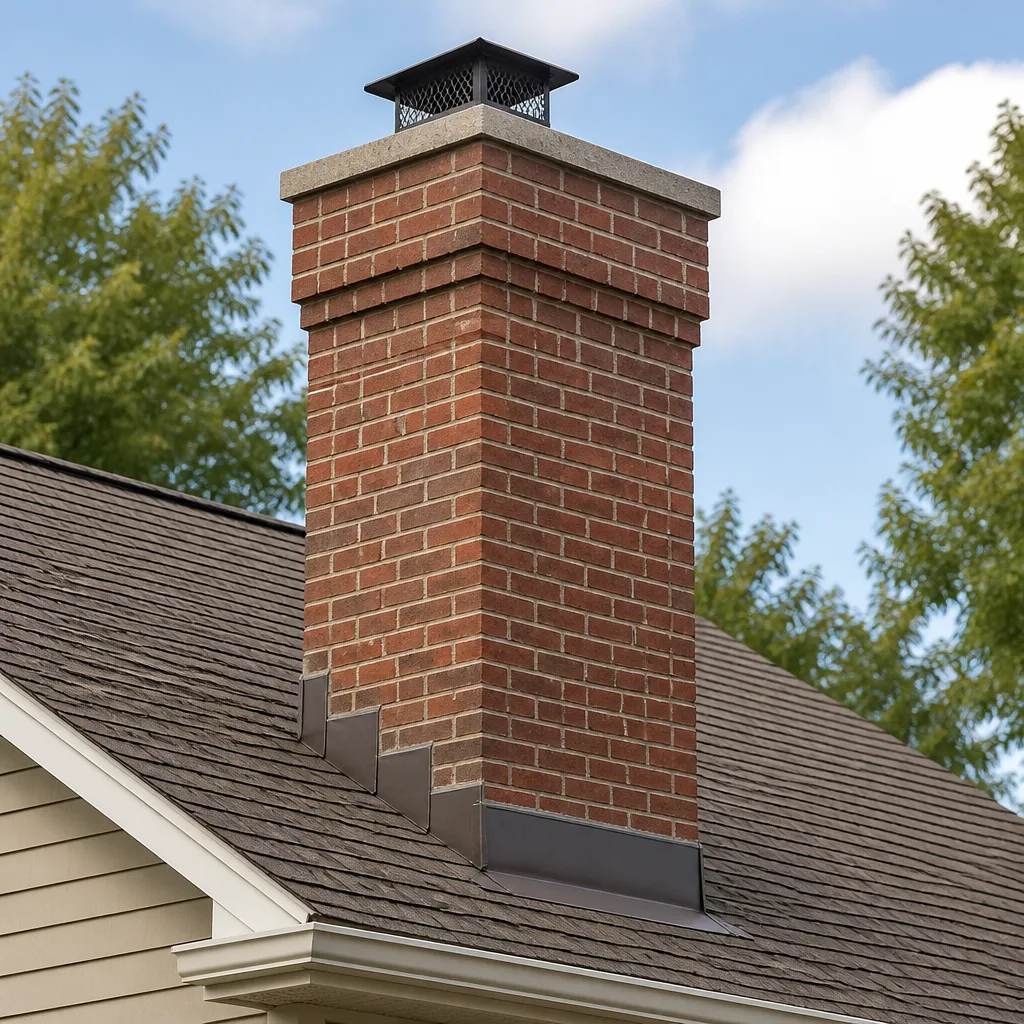 Masonry repair
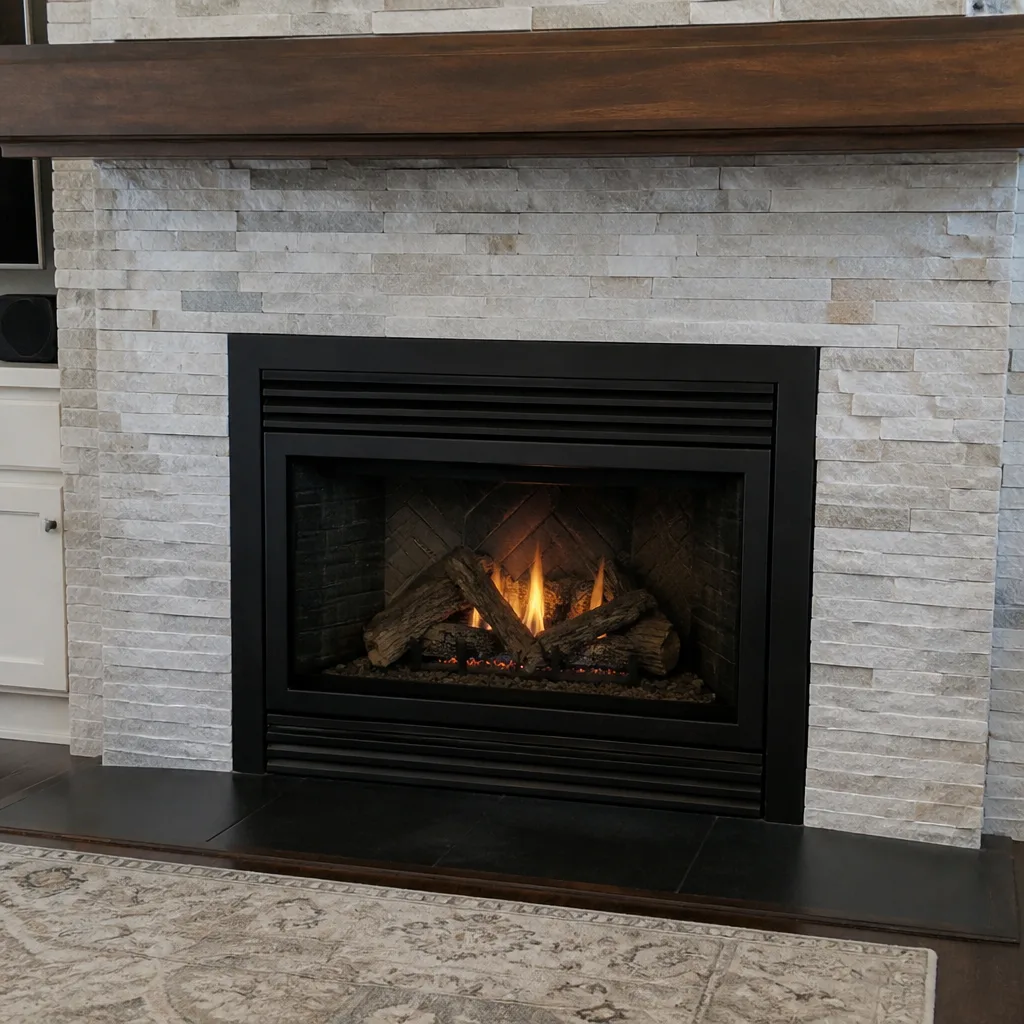 Gas fireplace service
Level 1 sweep and inspection to the NFPA 211 annual standard - flue, crown, cap, and flashing checked and photographed
Chimney sweep logs do not sweep chimneys. They loosen some creosote - which then falls where a brush and vacuum still have to collect it.
Chimney Sweep Troubleshooting in Winston-Salem: Common Problems and How to Fix Them
If your fireplace smokes back into the room after a cleaning, the chimney wasn’t the problem – the cleaning just wasn’t the solution. That’s the thing most homeowners miss: a sweep clears creosote, but it can’t fix draft, seal a cracked liner, or stop water from eating the crown. Those are separate problems with separate answers. In this guide we walk through the symptoms Winston-Salem homeowners actually report – smoke rolling into the living room, a smoky smell in July, stains on the ceiling near the chase – and show you how to tell which problem you’re really looking at before anyone touches the flue.
Quick Answer
Most chimney problems in Winston-Salem come down to one of four things: a draft issue, liner damage, moisture intrusion, or simple creosote buildup – and each has a different fix. A sweep fixes creosote. A draft problem needs a flue or cap correction. A cracked liner needs relining with a system like DuraFlex or HeatShield. Water entry needs the crown, flashing, or cap addressed. Diagnosing the right one first, usually with a camera inspection, is what prevents a cheap repair from masking a real hazard.
Styles & brands we work with
- Sweep & inspection
- Caps & crowns
- Flue relining
- Masonry repair
- Gas fireplace service
Table of Contents
- Smoke Backdraft vs. Draft Starvation
- Why Your Chimney Smells Smoky Between Uses
- Identifying Moisture Intrusion by Where It Stains
- What Thumps and Popping During a Fire Tell You
- Creosote: The Problem a Sweep Actually Solves
- When a DIY Fix Is Fine and When It Isn’t
- The Winston-Salem Seasonal Checklist
- Common Mistakes to Avoid
Chimney Problems in Winston-Salem: Start With the Symptom
Troubleshooting a chimney works backward from how most people approach it. You don’t start with the fix – you start with the symptom and work toward the cause. A fireplace that won’t draw, a smell that shows up in summer, a stain that appears after a hard rain: each points to a different part of the system. Chimneys here are systems, not just flues, and treating them that way is the difference between solving a problem once and paying for the same repair twice.
Here’s the symptom-first framework we use on every chimney sweep visit:
- Name the symptom precisely. “It smokes” isn’t specific enough. Does it smoke on startup, or only when the fire dies down? Does the smell show up after rain, or only in warm weather? Write it down.
- Match it to a system component. Draft problems point to the flue and the termination. Smells and stains point to the liner and the crown. Buildup points to the flue interior.
- Confirm with a camera before any repair. A written inspection with photos shows you the actual condition of the liner, crown, and flue, so a repair recommendation is verifiable rather than assumed.
- Fix the cause, not the symptom. A sweep on a drafting chimney is wasted money. So is a cap on a liner that’s already failing.
Winston-Salem’s older housing stock – the bungalows and colonials around Ardmore, West Salem, and Washington Park, plus the historic homes closer to Old Salem – tends to have interior masonry chimneys with original terracotta liners. Those liners crack as they age, and a cracked liner is the root of more “it doesn’t work right” complaints than any other cause. Newer construction west of the city, off Robinhood Road and in the neighborhoods around Hanes Mall, often uses prefabricated metal fireplaces with their own failure modes – failed gaskets, sagging liners, cracked refractory panels. Knowing which kind of chimney you have is step one.
If you’re not sure where to start, the place to begin is always with an inspection. A full-system inspection paired with a sweep tells you what’s actually happening, not what a symptom suggests. That’s the approach we take at Jasper Chimney Sweep: inspect, clean, repair, handled by one team with one standard, so nothing falls through the cracks between contractors.
Smoke Backdraft vs. Draft Starvation in Winston-Salem Homes
Smoke rolling into the room has two very different causes, and they have two very different fixes. Backdraft is smoke being pushed back down the chimney by outside pressure – wind, a competing exhaust fan, or a nearby taller structure. Draft starvation is smoke failing to rise at all because the flue is too cold, too short, or too large for the firebox. Telling them apart changes what you fix.
Here’s how to tell them apart:
- Backdraft: The fire starts fine, then smoke pours out when the wind picks up, or when you turn on the bathroom fan or the kitchen exhaust. It often comes and goes with weather.
- Draft starvation: Smoke rolls out on startup, before the fire has built any heat. It improves as the fire warms up, then maybe returns when the fire dies down. The chimney never seems to “catch.”
In Winston-Salem’s older homes, draft starvation is common for two reasons. First, original flues were often sized for open-hearth fires with much larger fireboxes than what’s there now, so the flue is oversized relative to the current heat source. Second, tighter modern houses – after window replacements and weatherstripping – starve the fire of the makeup air it needs. A fireplace needs air to draw, and a sealed house doesn’t provide much.
Backdraft in this climate often traces to the termination. A short chimney that doesn’t clear the roofline, a nearby tree, or a competing exhaust can all depressurize the flue. A proper cap from Gelco or Famco, sized and installed correctly, resolves a surprising number of backdraft complaints on its own. It’s not a universal fix – the flue still has to be sound – but it’s a common one.
What we don’t recommend: cracking a window as a permanent solution. It works, which is why people do it, but it’s a workaround, not a fix. If you need to open a window to get your fireplace to draw, the chimney has a pressure or sizing problem worth diagnosing properly.
Why Your Chimney Smells Smoky Between Uses
A smoky smell in the firebox when the fireplace is cold almost never means “needs a sweep.” It usually means one of three things: a cracked liner letting creosote contact moisture, a failed crown letting water into the chase, or a downdraft pushing outside air back down the flue. The first two are the ones to take seriously.
Here’s why. Creosote that has soaked into a cracked liner or a porous flue wall becomes volatile when the humidity rises. Winston-Salem summers are humid, and that humidity is exactly what mobilizes the creosote smell. In winter, when the air is dry and the chimney has been in use, you don’t notice it. Come June, it’s unmistakable. That’s a sign the liner itself has failed – creosote is sitting in the crack, not on the surface.
A failed crown shows up the same way. The crown is the concrete cap at the top of the chimney that sheds water away from the flue. When it cracks – as most masonry crowns eventually do – rain gets into the structure. It soaks down through the brick, picks up creosote along the way, and the smell appears in the firebox. A cracked crown also causes the spalling, efflorescence, and mortar damage that leads to expensive repairs later.
Downdraft is the third cause and the least serious. A cold chimney with a nearby tree or a taller structure close by can pull air back down into the house. It smells like a cold fireplace, not creosote. A cap or a top-sealing damper often solves it.
Telling these apart is not something you can do by smell alone. You need to look at the crown from the roof and the liner from the inside. That’s why the chimney repair visit starts with a camera inspection: you see the crack or the failed crown on the screen before any recommendation is made. If it’s a downdraft and the liner and crown are sound, we’ll tell you so.
Identifying Moisture Intrusion by Where It Stains
The location of a water stain tells you almost everything about where the leak is coming from. Above the firebox points to the liner or crown. At the ceiling near the chimney chase points to the flashing at the roofline. Inside the flue itself points to an uncapped or under-capped termination. Read the stain before you read the repair estimate.
Here’s the breakdown:
- Staining inside the firebox or on the smoke chamber above it: Water is entering from the top and running down the flue. Usually a failed crown, a missing or loose cap, or a cracked flue tile joint. This is the most common moisture pattern we see in Winston-Salem, and the most commonly missed by homeowners.
- Staining on interior walls or ceiling near the chimney chase: The leak is at the flashing – the metal where the roof meets the chimney. Flashing failures are roof problems as much as chimney problems, and they show up as stains or damp patches on the ceiling or the top of the wall.
- Staining or efflorescence on the exterior brick: Water is soaking into the masonry from the top or from a failed crown, then migrating outward. The white powder (efflorescence) is salts drawn out by evaporating water – a clear sign the brick is wet well below the surface.
- Rust stains or water tracks on the damper or firebox floor: Classic uncapped flue. Rain goes straight down. It happens primarily on chimneys without a proper cap.
Winston-Salem’s climate makes moisture problems worse than the average. Our humid summers keep exposed masonry wet for long stretches, and the freeze-thaw cycles in midwinter crack masonry that water has already weakened. A chimney cap from Gelco or Famco is a straightforward, low-cost fix that closes the largest moisture opening. A failed crown is a bigger repair, but also a structural one – a new crown keeps the whole chimney standing.
Caps and crown repair are rarely urgent in the sense of “today.” They are urgent in the sense of “before the next freeze,” which is why we recommend a look at the crown and cap every fall, ahead of burning season. A moisture problem caught in October is a repair. Caught in March, after a winter of freeze-thaw, it’s often structural.
What Thumps and Popping During a Fire Tell You
A single soft thump when the fire heats up is usually normal metal expansion. A series of sharp pops, a repeated ticking, or a thump followed by a change in how the fire draws is not normal, and it usually points to liner integrity or a loosened component that the heat is stressing.
Normal sounds first, so you can rule them out. A metal fireplace insert or a prefabricated fireplace expands as it heats, and expansion is audible – a single low thump, sometimes a tick, minutes after lighting. It’s the same sound a metal woodstove makes. Warmth rising through a cold flue can also create a soft rushing sound as draft establishes.
Sounds that warrant a look:
- Repeated sharp pops during the burn: Usually creosote flaking or the liner shifting as it heats. If the liner is cracked or the joints are loose, heat stress moves it and you hear it.
- A thump followed by a draft change: Often a damper plate or a cap component that has come loose. The thump is the part moving, and the draft change is the flue opening up or closing off.
- Rattling or grinding from the top of the chimney: A cap that’s come loose or a top-sealing damper that’s failed. Familiar from Olympia Chimney and similar damper systems when the mechanism ages.
- A pop or crackle from inside the wall behind the firebox: The serious one. It can indicate the liner has separated from the masonry or a flue tile has cracked. Stop using the fireplace and get it inspected.
Sound alone can’t confirm liner damage. A camera inspection can. We use camera inspection on every job where the symptom points at the liner, because a crack you can see on a screen is a crack you can decide about. A crack you suspect from a noise is just a worry.
Creosote: The Problem a Sweep Actually Solves
Creosote buildup is a real problem, and it’s the one a sweep genuinely fixes. But not all creosote is the same, and not all of it responds to a brush. Third-degree creosote – the glazed, hardened kind – can require a chemical sweep or a mechanical rotary cleaning to remove. A standard brush pass that leaves it in place is not a fix.
There are three stages:
- First-degree: Soot and light flaky deposit. Brushes off easily.
- Second-degree: Crusty, flaky black deposit. Brushable with the right technique.
- Third-degree: Glazed, hardened, tar-like deposit that has bonded to the flue wall. Often requires chemical treatment or rotary cleaning, and sometimes indicates the liner is compromised beneath it.
Third-degree creosote is the one that keeps us up at night. It’s the most combustible form, and it builds up when a fireplace is burned with green wood, with the damper partly closed, or with a fire that never gets hot enough to burn clean. In Winston-Salem’s older homes with original liners, third-degree creosote is more common than homeowners expect, particularly on fireplaces that get used a few times a week through the winter without an annual sweep.
A proper sweep removes what’s removable and identifies what isn’t. That’s why the sweep and the inspection happen together – the sweep tells you what’s on the flue wall, and the inspection tells you what’s under and around it. You need both to know what you’re dealing with.
How often should you sweep? The National Fire Protection Association standard is annual, and for regular wood burners in Winston-Salem, an annual fall sweep ahead of burning season is the right cadence. If you burn more than a cord a year, or you’ve had a chimney fire, or you notice glazed creosote, you may need it more often. The sweep isn’t the fix for every problem – but for creosote, it’s the fix, and it’s the one place where “just needs a sweep” is usually correct.
When a DIY Fix Is Fine and When It Isn’t
Some chimney problems are safely a homeowner’s job. Many are not, and the dividing line is whether the fix involves climbing the roof, opening the flue, or working inside the firebox. If it involves any of those, get it inspected by a professional before you touch anything.
DIY-appropriate fixes:
- Checking that the damper opens and closes freely.
- Removing ashes and keeping the firebox clear.
- Confirming the cap is present and visibly intact from the ground with binoculars.
- Checking the firebox for obvious cracks or loose mortar.
- Reading the damper and firebox for water stains after heavy rain.
Not DIY-appropriate, ever:
- Anything on the roof. Ladders on wet or mossy roof shingles, working near the chimney crown at height, running a brush from the top down: this is a fall hazard for a trained technician, and much worse for a homeowner. Roof work is a leading cause of serious injury in home maintenance. Don’t.
- Opening the flue or the liner. You cannot see what’s inside the flue without a camera, and a brush pass from below without knowing the liner condition can dislodge debris into the smoke chamber or damage an already-cracked tile.
- Anything involving the firebox interior beyond inspection. The firebox, smoke chamber, and damper assembly are structural. Firebrick and refractory repairs require the right material and the right technique.
- Chasing a smell or a sound. If your fireplace smells smoky between uses or thumps when it burns, that’s the camera inspection trigger, not a DIY job.
The distinction matters because a bad DIY fix often makes the diagnosis harder later. A cap installed wrong, a damper “adjusted” with a pry bar, a firebox crack sealed with the wrong mortar – all of it costs more to correct than the original problem. When the symptom requires a camera inspection, that’s the point to call. A free estimate tells you what you’re looking at before any work is booked.
The Winston-Salem Seasonal Chimney Checklist
Chimney problems in Winston-Salem follow the seasons, and a short annual routine catches most of them before they become repairs. Late summer and early fall are the time to act, ahead of the first fire and the first freeze.
- Late summer: Look at the crown and cap from the ground. Cracked crown? Missing or damaged cap? Call before the fall rush. Stains on the exterior brick or white efflorescence are signs of moisture that needs addressing.
- Early fall: Book the annual sweep and inspection. This is when you find out what the summer humidity did to the liner and what the winter will require.
- First fire of the season: Warm the flue before lighting the main fire – a rolled newspaper held near the damper warms the flue and establishes draft. If it still smokes back, note whether the fire was starting or dying. That tells you which problem you have.
- Midwinter: Keep an eye on sounds. A thump that becomes a pop, or a pop that becomes a rattle, is worth a call. Listen for changes in how the fireplace draws.
- Spring: After the last fire, check the firebox and damper for water tracks or rust. If the smell shows up between uses, that’s a liner or crown symptom, not a sweep issue.
The seasonal approach fits the Winston-Salem climate because our weather is what drives most of these problems: humid summers mobilizing creosote smell, freeze-thaw cracking already-weakened masonry, and the occasional ice storm stressing a cap or a flashing detail. A chimney that’s inspected each fall and repaired on evidence is a chimney that doesn’t surprise you. Our technicians have up to 9 years of experience; they’re the same team that does the inspection, the sweep, and the repair, which matters when the person diagnosing the problem is the person fixing it.
Common Mistakes to Avoid
- Assuming every problem needs a sweep. Creosote is one cause among several. A sweep on a drafting chimney or a chimney with a failed crown is money spent on the wrong fix, and it delays the repair the chimney actually needs.
- Cracking a window as a permanent draft fix. It works, which is the trap. The real problem – a flue that’s too short, too large, or under-capped – keeps getting worse while the window stays open.
- Ignoring the smoky smell between uses. A smell in July is a smell of creosote in a crack or water in the masonry. It’s diagnostic, not cosmetic. If you’re not sure whether your liner or crown has failed, the smell is the reason to find out.
- Skipping the cap because “it still works.” An uncapped flue is an open door for rain and wildlife. Gelco and Famco caps are built to last, not to be replaced every other season. If your current cap is loose or rusted, it’s not protecting anything.
- Letting a “handyman” touch the liner. Liner work requires the right system – DuraFlex for flexible relining, HeatShield for ceramic sealant repair – and the technique to install it correctly. A generic patch tends to fail in a season or two, and the second fix is more expensive than doing it right the first time.
- Burning a fire without warming the flue first. In a Winston-Salem fall, a cold flue with a cold house and a damper that just opened is a recipe for a backdraft on startup. Warm the flue, then light the fire. It’s a small habit that prevents a lot of smoke alarms.
- Skipping the inspection when buying or selling a Winston-Salem home. A chimney that hasn’t been inspected in years can look fine from the living room. A written inspection with photos tells you what the liner and crown look like before closing, which is the only time the finding is easy to act on.
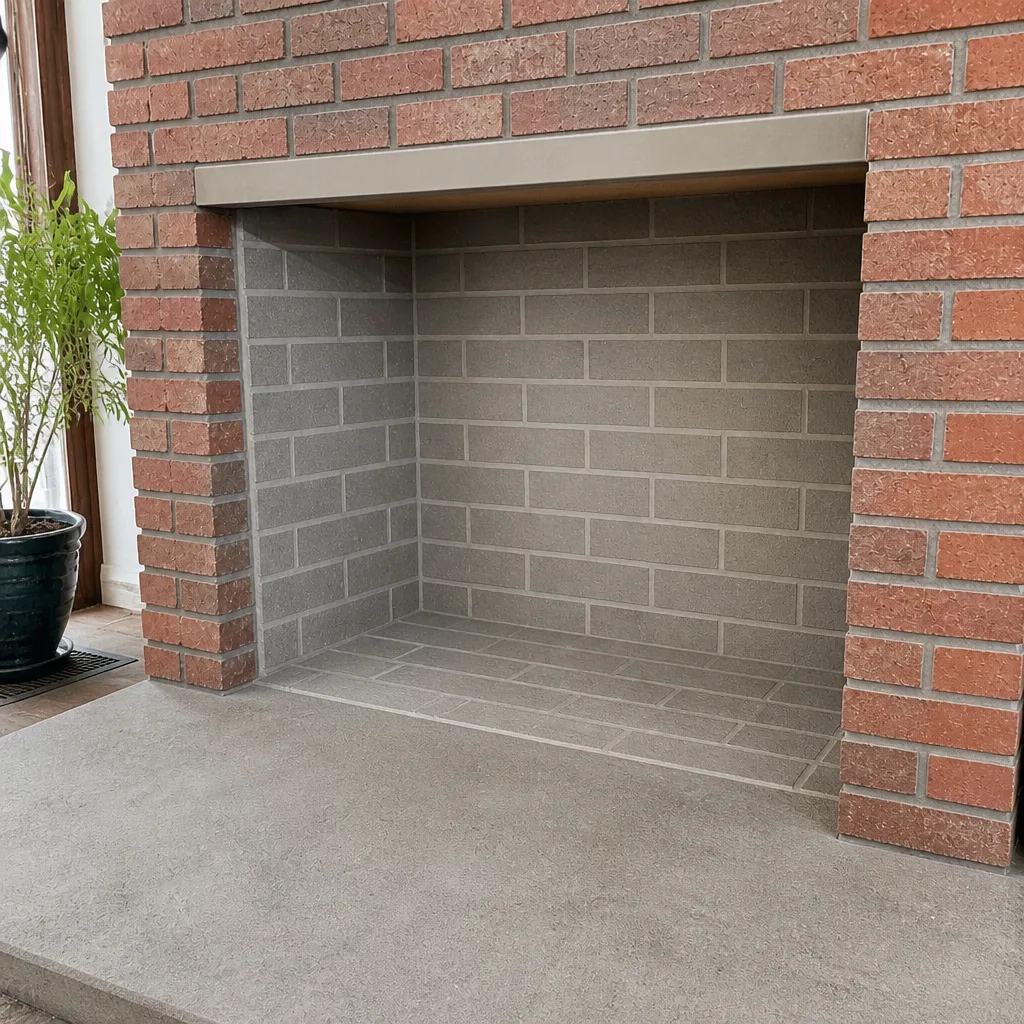
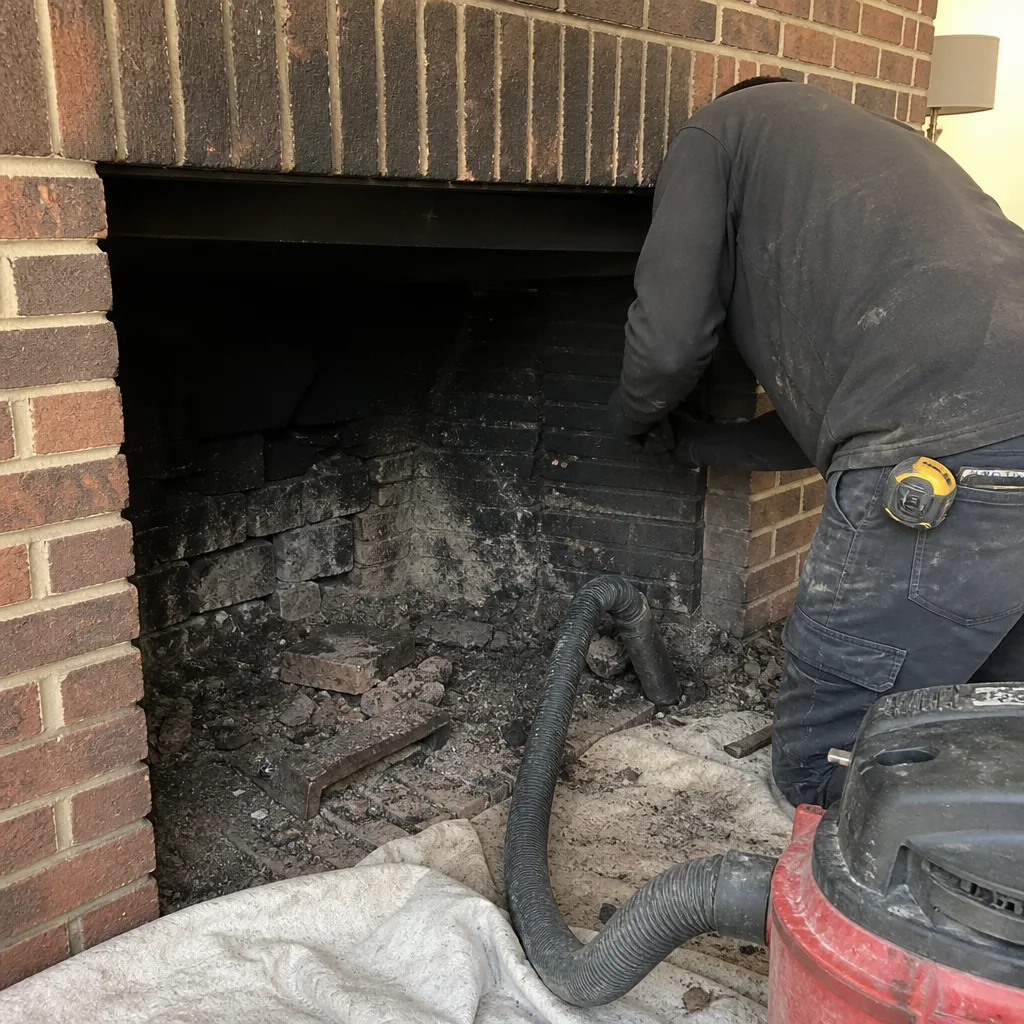
See the difference
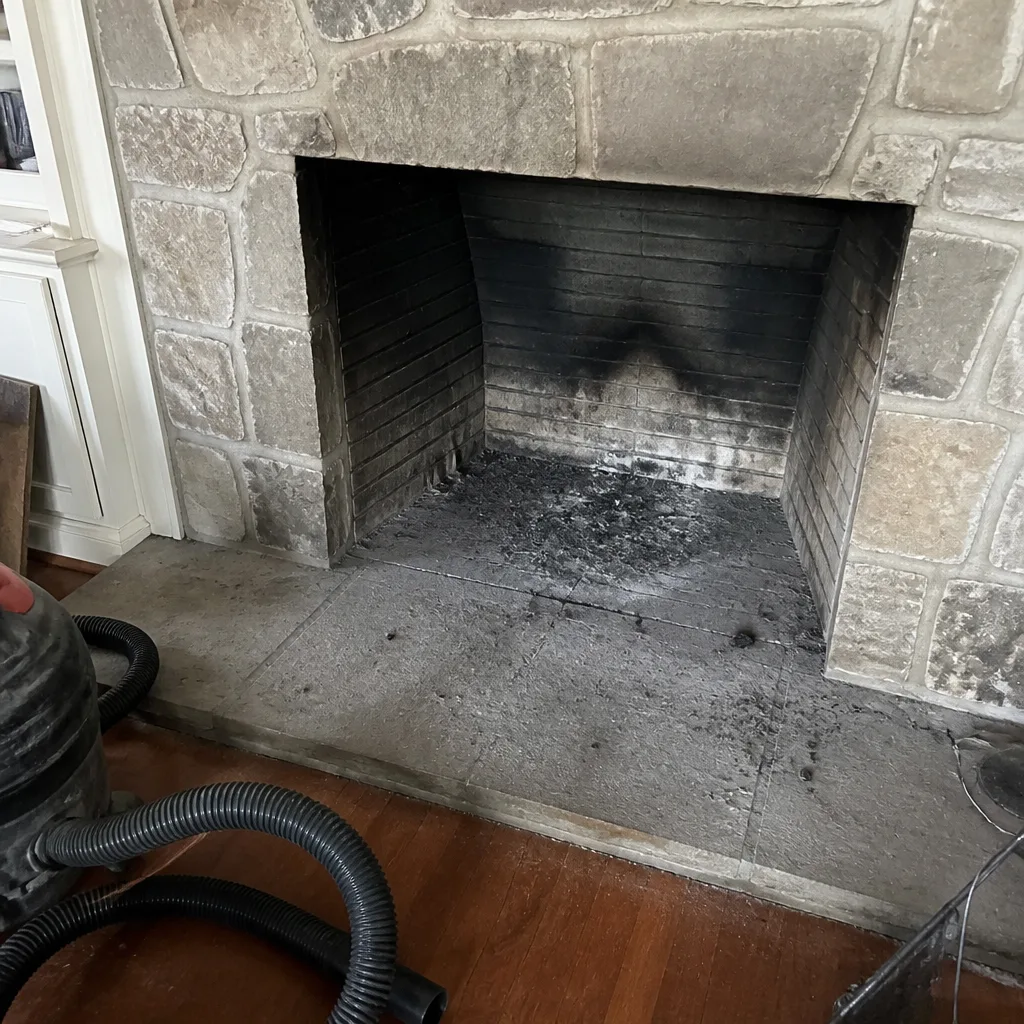 Before
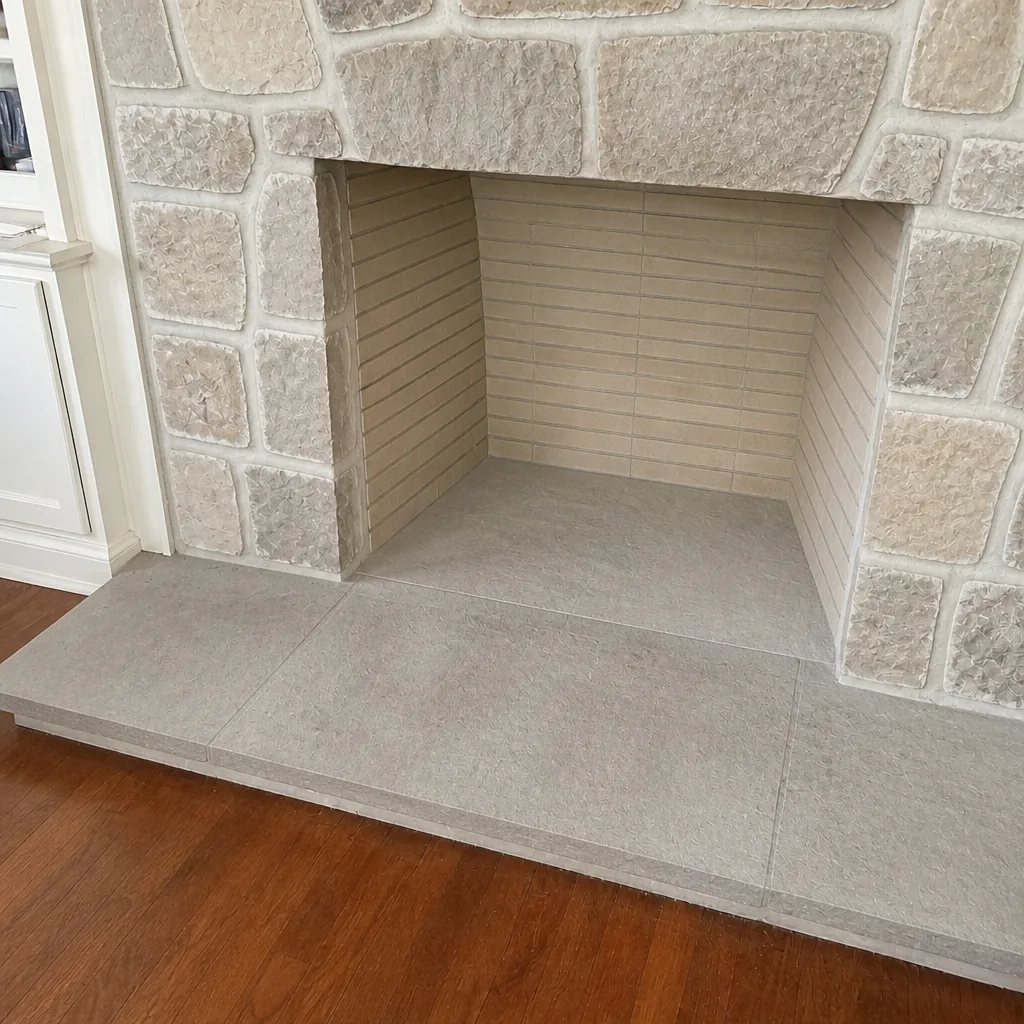 After
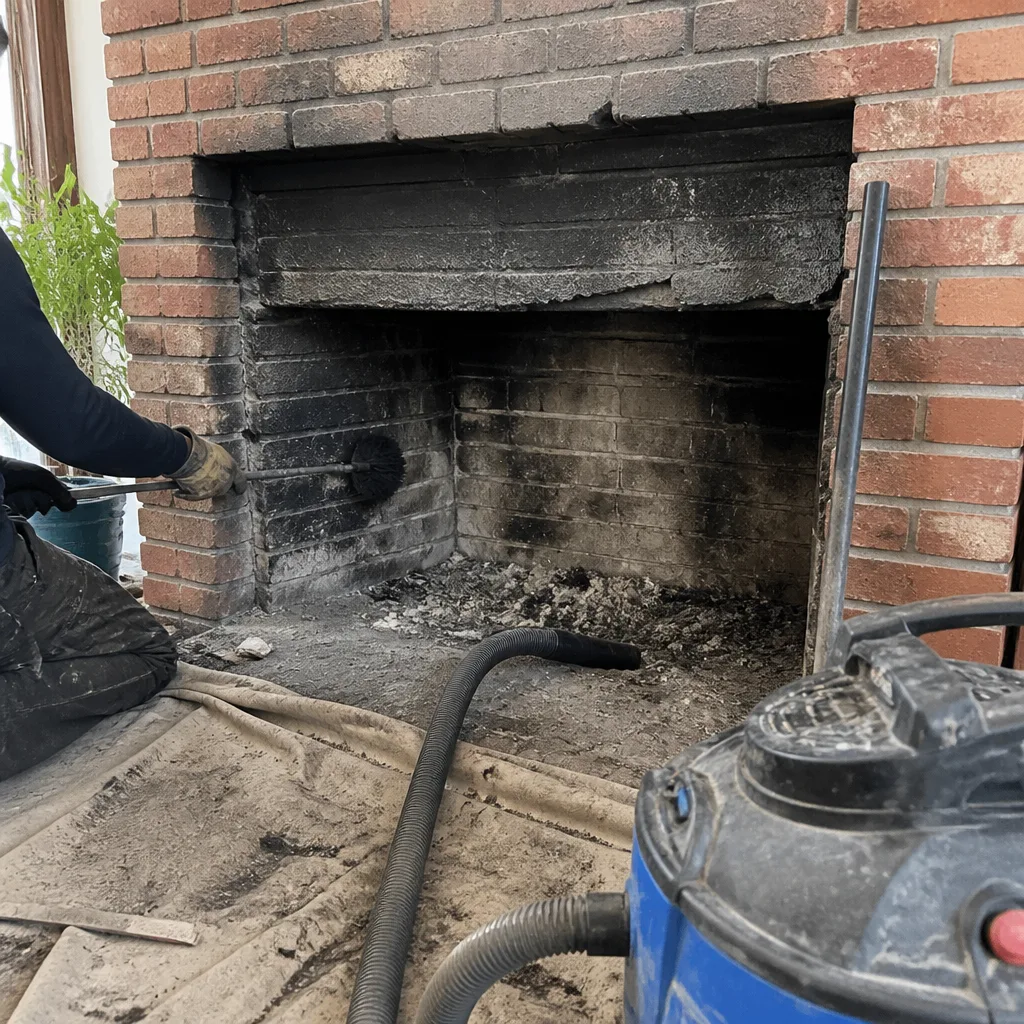 Before
 After
 Before
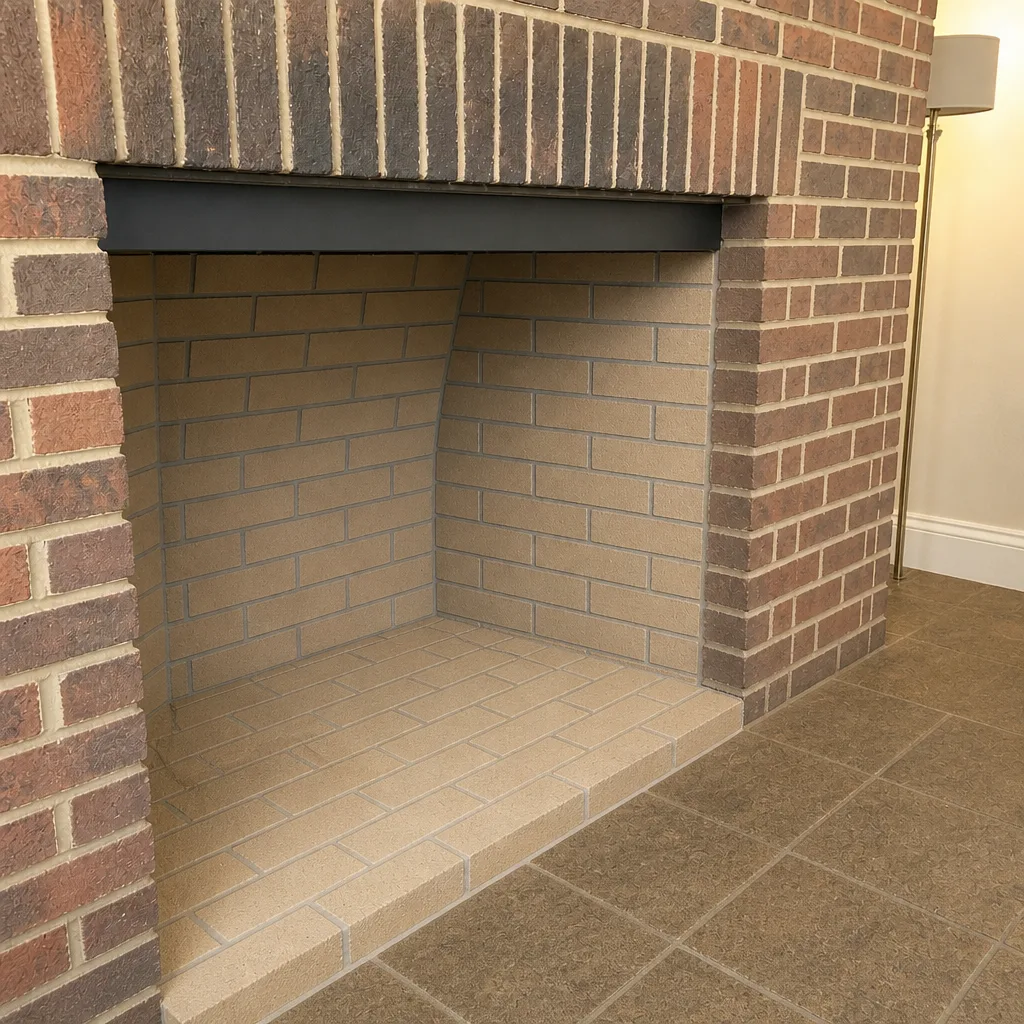 After
When to Call a Professional
Call a professional when the symptom points at the liner, the crown, the roof, or the firebox interior. Smoke on startup that improves as the fire warms is worth diagnosing; smoke that appears with wind or a bathroom fan is worth diagnosing; a smoky smell between uses, thumps that change into pops, water stains anywhere on the chimney, a fire that has ever gone out through a chimney fire – all of these need a camera inspection, not a guess.
Jasper Chimney Sweep offers free estimates in Winston-Salem – call (866) 343-2983. We answer 24/7. Fast dispatch from 7am to 7pm, Sunday through Friday. We inspect, clean, and repair under one roof, using the same professional-grade systems – DuraFlex, HeatShield, Gelco, Olympia Chimney, Famco, Copperfield – that certified chimney technicians specify. You’ll see the condition of your chimney on screen before any recommendation, and you’ll know exactly what it needs before any work begins. A free estimate is the starting point, and the price is set per job by the written estimate.
Frequently Asked Questions
A standard chimney sweep in Winston-Salem typically costs between $150 and $300, and the price depends on the flue condition, access, and whether a camera inspection is included. Third-degree or glazed creosote may require additional treatment, which the written estimate covers before booking. Call (866) 343-2983 for an exact quote – estimates are free.
You need a new liner if the camera inspection shows the current liner is cracked, separated, or otherwise compromised – not before. A new liner is often a HeatShield ceramic sealant repair or a DuraFlex flexible liner install, depending on the type and extent of the damage. If the inspection shows the liner is sound, we’ll say so and you don’t pay for a liner. Call (866) 343-2983 to book the inspection – estimates are free.
Annually, ahead of burning season, is the standard for regular wood burners. If you burn more than a cord a year, notice glazed creosote, or have had a chimney fire, you may need it more often. The annual sweep pairs with a full-system inspection, which catches liner and crown problems the sweep itself won’t fix. Call (866) 343-2983 to book – estimates are free.
Creosote keeps building, and third-degree creosote is the most combustible form – a chimney fire is the real risk, not just poor draft. Moisture that goes unaddressed at the crown keeps working into the masonry and the freeze-thaw cycles in winter crack whatever the water has already weakened. Skipping one season is a risk; skipping several is a repair. Call (866) 343-2983 for a look – estimates are free.
That pattern is draft starvation, not backdraft – the flue is cold and hasn’t established enough of a pressure difference to pull smoke up, so it spills into the room until the fire heats the flue. Warming the flue before lighting the main fire often fixes it. If it doesn’t, an inspection can check whether the flue is oversized or under-capped. Call (866) 343-2983 for an exact quote – estimates are free.
Almost always a cracked liner or a failed crown, not leftover creosote on the flue wall. Humidity mobilizes creosote that’s trapped in the crack or soaked into wet masonry, and the smell appears in warm weather. Downdraft is the third cause, but it smells like a cold fireplace rather than creosote. The right first step is a camera inspection, which shows the cause on screen. Call (866) 343-2983 – estimates are free.
The Bottom Line
The chimney problem you have is almost always a specific one, and matching the symptom to the cause is what avoids wasted repairs. Smoke on startup points at draft. A smoky smell between uses points at the liner or crown. Water stains point at the cap, crown, or flashing. Pops during a fire point at liner integrity. Creosote buildup is the one problem a sweep actually solves. If you take nothing else from this guide: diagnose first, then fix. A camera inspection with a written report shows you the condition of your chimney before anyone recommends work, and it tells you plainly when a problem can safely wait. Jasper Chimney Sweep handles inspection, cleaning, and repair as one team, with one standard, using the same professional-grade materials the industry specifies. If any of these symptoms sound like yours, call (866) 343-2983 for a free estimate. We answer 24/7. Fast dispatch from 7am to 7pm, Sunday through Friday.
Written by the team at Jasper Chimney Sweep.