
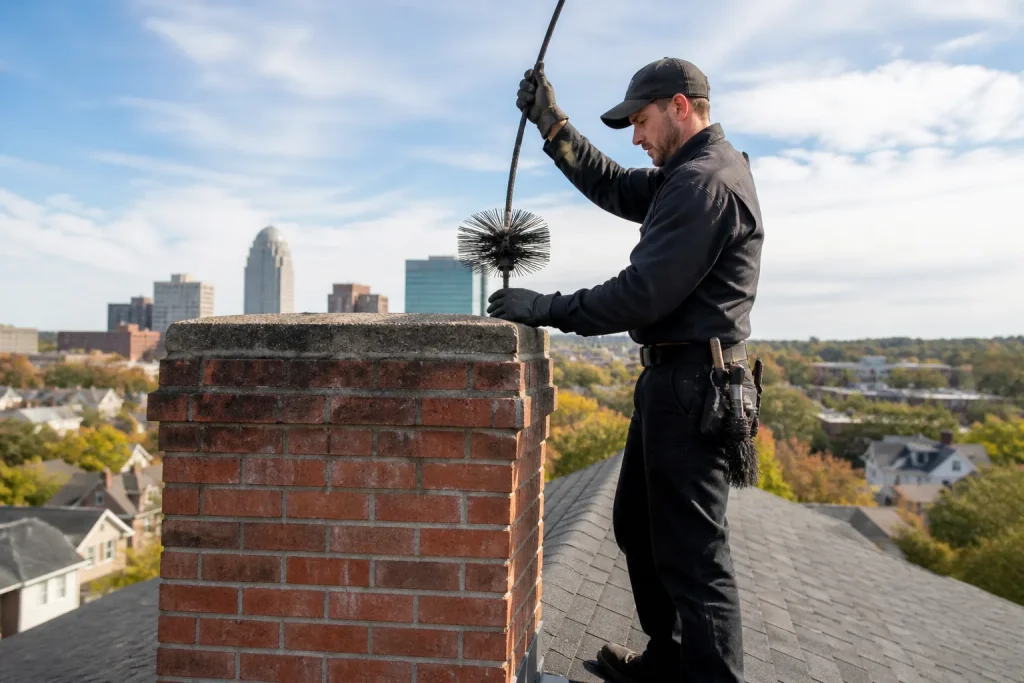
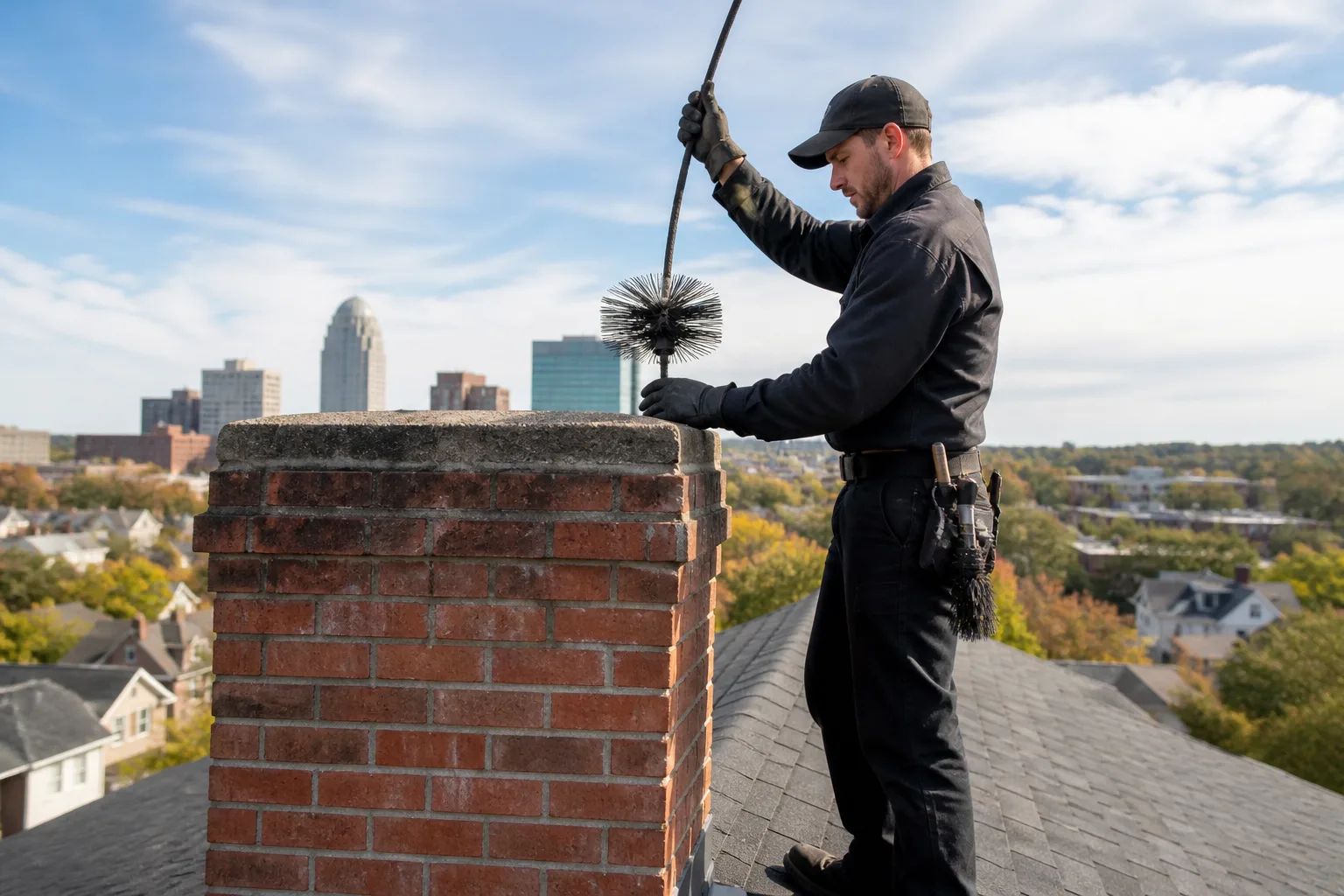
DuraFlex Chimney Sweep in Winston-Salem: A Homeowner’s Guide
A lot of homeowners hear “you need a liner” and nod along, then sign off on work they don’t fully understand. But DuraFlex and a generic flexible liner aren’t the same thing, and the difference decides how long the repair lasts and what it really costs. DuraFlex is a stainless steel relining system built for high-temperature flue gas applications, not a piece of corrugated metal you’d pick up at a hardware store. We wrote this guide so homeowners here can ask the right questions before any liner goes in.
If you’d rather have a specialist look at the flue than work through it on your own, call (866) 343-2983 and we’ll set up a free estimate.
What Is DuraFlex, Exactly?
DuraFlex is a flexible stainless steel chimney liner system made for relining flues that handle high-temperature flue gases, typically from wood-burning fireplaces and wood stoves. The alloy most specified for these jobs is 316Ti, a titanium-stabilized stainless that resists heat and corrosive flue products well. That’s a meaningfully different material from the thin, generic flex liners sold as a budget substitute. The difference shows up in how the liner holds up over seasons of use, not on the day it’s installed.
A DuraFlex system arrives as a full assembly, not just a tube. That matters because the parts that finish a job are the parts that make it work:
- The corrugated stainless liner itself, sized to the appliance and the flue
- A top plate and cap that terminate the system correctly at the chimney crown
- Connectors and fittings that tie the liner into the appliance and the flue
A flexible liner without proper sizing and termination is just metal in a channel. In our experience, more liner problems come from bad installation than from the liner material itself. When a system gets specified and fitted correctly, it restores a compromised flue to full code compliance and gives the appliance a proper path for exhaust. When it’s slapped in without thought, the homeowner pays for the material and doesn’t get the performance.
That’s the core of why we treat your chimney as a system, not just a dirty flue. A liner is one component, and it only performs when the whole assembly is planned and installed right.
When Does a Chimney Need Relining?
A chimney needs relining when the existing flue lining can no longer safely contain flue gases and heat. For most Winston-Salem homes, that lining is clay tile, and clay deteriorates over time. Here are the conditions that call for a reline:
- Cracked liner sections. Hairline cracks can widen with heat cycles, and gaps let flue gases escape into the chimney structure.
- Missing or displaced tile. A shifted or absent section leaves an open path, and that’s a genuine safety concern, not a cosmetic one.
- Deteriorated clay tile joints. Failing mortar joints between tiles create leaks you can’t see from the firebox.
- A flue sized wrong for the appliance. If the flue is oversized or undersized for what’s burning, draft suffers and a properly sized liner fixes it.
- A flue that was never lined. Some older chimneys never had a liner to begin with, and that can’t stay as-is.
In the Winston-Salem area, the mix of older housing stock and trees that put out a lot of creosote means these conditions come up in a fair number of homes. Our Winston-Salem page walks through how the local housing and burning habits shape chimney maintenance.
DuraFlex or HeatShield? How to Tell Which Repair You Need
Not every damaged flue needs a full liner. This is the part homeowners most often get wrong, and it’s where a careful inspection pays for itself. The short answer: HeatShield resurfacing can sometimes repair a flue from the inside, while a DuraFlex liner is the answer when the flue lining is gone, poorly sized, or can’t be restored. Matching the repair to the actual damage is the whole game.
When HeatShield Resurfacing Makes Sense
HeatShield is a ceramic sealant system applied to the inside of an existing flue to fill cracks, seal joints and resurface a liner that’s deteriorated but still structurally present. If your flue lining is there but cracked, HeatShield can restore a smooth, sealed surface. It’s a specialized process most generalist services don’t carry or know how to apply. When a flue is a good candidate, we’ll say so, because the right repair is the one that fixes your actual condition.
When a DuraFlex Liner Is the Answer
A DuraFlex liner is the answer when the damage is beyond resurfacing. If liner sections are missing, if the clay has broken down structurally, or if the flue is the wrong size for the appliance, resurfacing can’t fix that, and a new stainless liner is the right call. A properly sized DuraFlex system gives the appliance a clean, contained exhaust path and brings the flue back into compliance.
What you should never accept is a liner recommendation you can’t verify. We include the inspection in the process so you see the flue on camera for yourself, and we’ll tell you plainly when a cheaper resurfacing will do. When we recommend a DuraFlex reline, you’re getting chimney repair based on evidence you can look at.
Why Installation Matters as Much as the Product
A premium liner installed poorly underperforms a decent liner installed correctly. Two things decide whether a DuraFlex system actually does its job, and neither one is the box it came in.
Sizing
The liner has to match the appliance and the flue. Too small and draft suffers, which can lead to smoke and weak performance. Too large and the appliance won’t draft correctly either. Sizing is a calculation based on the appliance, the flue’s dimensions and the venting requirements. Get it wrong and the homeowner paid for a liner that never worked the way it should.
Termination
The top of the system matters as much as the bottom. The top plate and cap have to position the liner correctly at the chimney crown, sealed against water and properly capped. A termination that’s off can let water in, break down insulation and undercut everything the liner is meant to do. In Winston-Salem, with the rain and temperature swings we get through the year, a sloppy termination catches up with a homeowner quickly.
This is why we install DuraFlex as a full system, and why we pair the reline with a cap or damper from Gelco, Famco or another professional-grade brand when the top of the chimney needs it. Built to last, not built to bring you back next season for the same fix.
What a DuraFlex Installation Day Looks Like
Knowing what the day actually involves takes a lot of the anxiety out of a reline job. Here’s the general flow.
- Prep. The work area gets protected, the appliance and surrounding floor get covered, and the crew sets up to keep dust contained. A reline is a bigger job than a sweep, and good prep protects your home.
- Removal and cleaning. The flue is cleaned and, depending on the job, old liner sections that block the path are addressed so the new liner seats correctly.
- Installation. The DuraFlex liner is sized, assembled and fed down the flue, then tied into the appliance and terminated at the top with the cap and plate.
- Verification. The finished flue is checked on camera so you see the liner, its connections and the termination, not just a handshake at the door.
Duration depends on the chimney, the flue condition and the appliance, so there’s no honest one-size figure. What we can promise is that a DuraFlex job is prepped and finished by the same company that inspected it, with one standard of work for the whole job. You get a written picture of your chimney’s condition, not a cleaning receipt.
How to Verify You’re Getting Genuine DuraFlex
A cheaper liner fitted to look like DuraFlex isn’t the same product, and it doesn’t carry the same warranty coverage. A substitute liner installed under a DuraFlex label leaves you with no recourse if something fails. Here’s how to protect yourself before you agree to a reline:
- Ask for the product name in writing on the estimate. Genuine DuraFlex should be named, along with the alloy specified for your job.
- Ask about the warranty and who honors it. The coverage should come from the manufacturer, not a verbal promise from the installer.
- Ask what the system includes. A real DuraFlex system has a top plate, cap and proper fittings, not just a tube.
- Ask to see the finished flue on camera. A contractor who uses genuine materials and installs well is happy to show you.
We stock and install DuraFlex, along with Olympia Chimney and Copperfield components, because these are the professional-grade materials certified chimney technicians specify. We handle the chimney sweep, the inspection and the reline under one roof, so nothing falls through the cracks between contractors. If a Winston-Salem homeowner calls us after being told they need a liner, we look at the flue first and tell them what we’d do in their position.
When to Call a Pro
Any time a flue liner is cracked, missing or in question, call a trained professional. Flue gases and creosote are genuinely dangerous, and relining is not a DIY job. There’s no safe shortcut here, and we’d rather walk you through a proper repair than see anyone taking chances with a chimney.
Related services in Winston-Salem: chimney repair and chimney sweep, both handled by the same company that inspects.
The Bottom Line
DuraFlex is a genuine relining system, not a generic flex liner, and it does one job well: restoring a compromised flue to safe, compliant condition when resurfacing won’t do it. The key things to hold onto:
- DuraFlex is a stainless steel relining system built for high-temperature flue gas applications, not a hardware-store flex tube.
- A damaged clay tile flue may be a candidate for HeatShield resurfacing, or it may need a full DuraFlex liner. A careful inspection tells you which.
- Installation, sizing and termination decide whether the system performs. The product alone doesn’t.
- Verify the product by name, the manufacturer warranty and the presence of a full top assembly before you agree to the job.
If you’re in Winston-Salem and need help, Jasper Chimney Sweep offers free estimates. Call (866) 343-2983. We answer 24/7. Fast dispatch from 7am to 7pm, Sunday through Friday. Our technicians have up to 9 years of experience, and the written estimate sets the final price, with nothing recommended that you can’t see on camera first.
Frequently Asked Questions
DuraFlex is a flexible stainless steel relining system, not a sweeping product. It’s installed to restore a compromised flue, while chimney sweeping is the routine cleaning that keeps any flue clear. Call (866) 343-2983 for an exact quote – estimates are free.
No. You can’t safely or reliably assess a flue without seeing inside it. Cracks, displaced tiles and worn joints are often invisible from the firebox, so a camera inspection is the only way to know. We show you what we find before recommending anything. Call (866) 343-2983 to book an inspection.
No. HeatShield resurfacing can seal cracks and worn joints on a flue that’s structurally present, but it can’t fix missing liner sections or a badly sized flue. Those cases call for a DuraFlex liner. The right repair depends on what the flue actually looks like. Call (866) 343-2983 and we’ll walk you through your options.
Get the product named in writing on the estimate, confirm the warranty is a manufacturer warranty, and ask whether the system includes a full top plate, cap and correct fittings. If a contractor is evasive about any of these, ask more questions before agreeing. For a free estimate on your Winston-Salem chimney, call (866) 343-2983.
Written by the team at Jasper Chimney Sweep.
Need Chimney Cleaning Help?
Call Jasper Chimney Sweep - licensed & insured, here with fast help in Winston-Salem.
(866) 343-2983